Charging as a benefit, billed per apartment.
Obelisk equips multi-family buildings and mixed-use property with shared charging: one connection, many residents, and a bill that lands on the right unit every month without the building manager touching a spreadsheet.
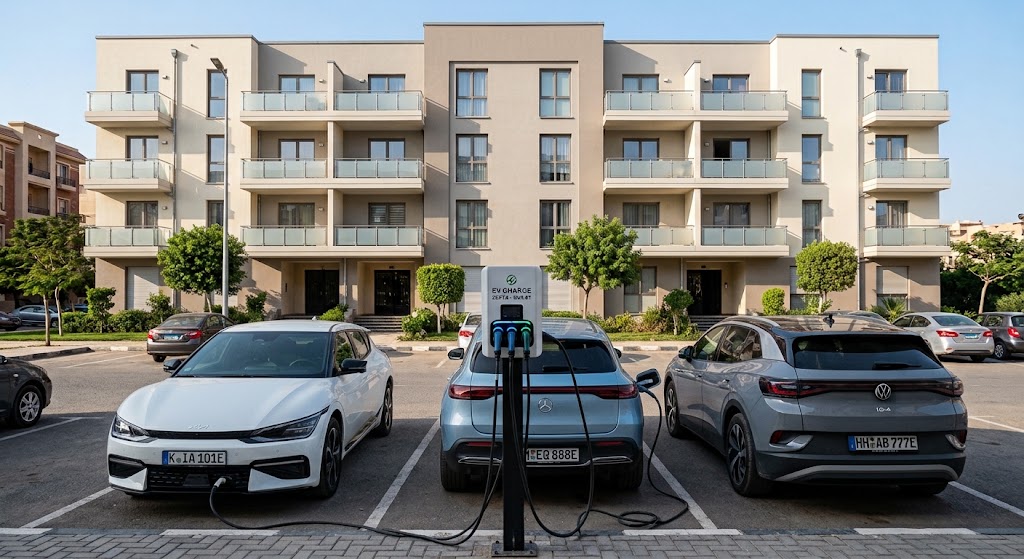
One connection, many households.
Obelisk manages one charger that serves the whole shared garage, identifies which resident charged, splits the energy per unit, and issues or exports the billing records for the property administration.
Property managers, housing associations, developers and owners’ associations equipping multi-family buildings and mixed-use sites.
A shared garage has one meter and many households. Without per-session attribution the cost lands in service charges and the residents who do not drive electric pay for those who do.
Charging is becoming a condition of letting and selling. It has to be installable inside the building’s existing capacity and billable without new administration.
What shared building charging needs.
Per-unit billing
Every session is attributed to a resident and their apartment, then billed or exported to the administration.
Load management
Points share the building connection so more spaces can be equipped without a grid upgrade.
Resident access
Residents charge with the app or an RFID token; guests can be given a separate tariff or no access at all.
Visitor and commercial charging
Open selected points to visitors or retail tenants at a public price.
Manager reporting
Consumption, cost and revenue per building and per period for the annual statement.
A shared connection that pays for itself.
No cross-subsidy in service charges
Each household pays for the energy it took, with the session detail to prove it.
More spaces per connection
Managed charging fits far more points inside the capacity the building already has.
A letting and resale argument
Charging becomes a standard building feature that supports rent and resale value, rather than a renovation still waiting to happen.
Administration stays small
Billing records are produced monthly without the manager collecting readings.
Questions property managers ask first.
Both models work. Points can belong to the building and be billed per use, or belong to individual residents with the building providing the connection and the load management.
By app account or RFID token, each linked to a unit. Sessions started without a recognised identity can be blocked or priced as visitor charging.
No. Each charge point meters its own sessions, which is what the per-unit billing is based on.
Load management redistributes the available power as points are added. Capacity planning is reviewed per building rather than per installation.
Yes. Obelisk can issue the invoices directly or export the per-unit amounts and session detail into the system the administration already uses.
Tell us about the building and its connection.
We will show how many parking spaces can be equipped under the existing capacity, and how residents are billed for what they use.