Find it, plug in, drive on.
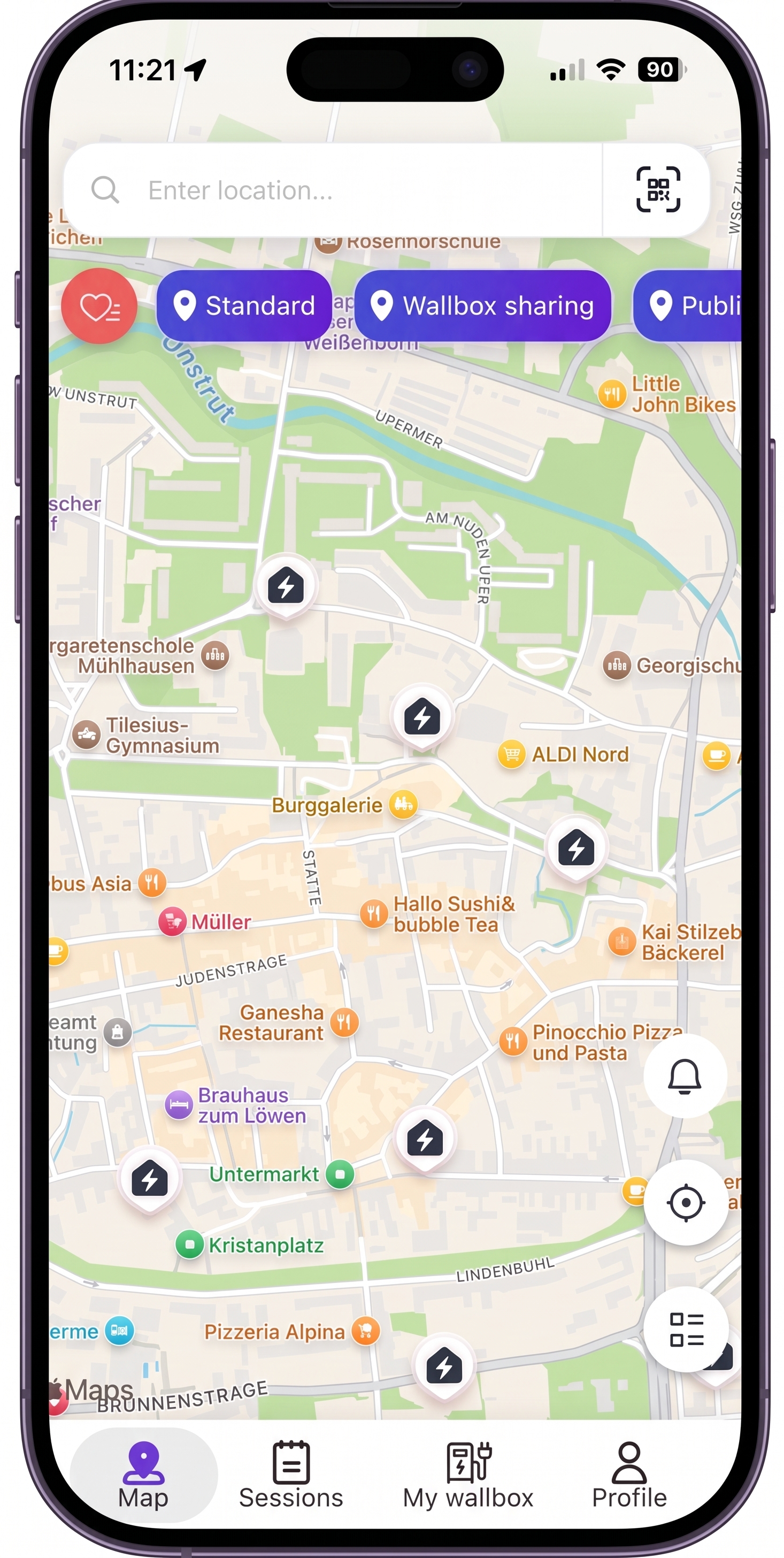
The Obelisk Charging App is how drivers reach your network. Public points, workplace chargers and shared wallboxes in one map, one account and one receipt.


The driver side of the same platform.
The app finds charging points near the driver, shows live availability and price before plugging in, starts and stops the session, and produces the receipt afterwards.
Public drivers, company car drivers reimbursed by an employer, drivers charging at home on their own wallbox, tenants in a building with shared charging, and wallbox owners who want to open their charger to others.
A driver deciding where to charge has to trust availability, price and access rules they cannot verify themselves. The app is what lets them act on that information instead of guessing.
For an operator, the app is the network experience. A driver judges the whole network by whether the point they see on the map is actually there, working and priced as shown.
What a driver can do in the app.
Map and search
Points clustered by area with live status, connector type and power, searchable by city or address.
Filters
Standard, public and wallbox-sharing points, filtered by favourites.
Start by QR code
Scan the code on the charging point to start a session, no card or app-to-app pairing needed.
Live session view
Energy delivered, elapsed time and running cost while the vehicle is charging.
Payments and receipts
Card or account billing, with a receipt per session and a monthly statement.
Wallbox sharing
Owners open a private charger to anyone, set a price and see what it earned.
Notifications
Session started, charging complete, and shared wallbox owner requests to charge.
History and costs
Every session with energy, cost and location, exportable for expense claims.
A better charge, and fewer support calls.
Most charging complaints are not about power. They are about not knowing whether a charging point is free, what it costs, or why the receipt does not match.
Fewer wasted trips
Live status and price are shown before the driver commits to a point.
Faster first session
Sign-up, payment method and a running session take one visit.
Receipts that match
The figures the driver saw during the session are the ones on the receipt.
Reimbursement without paperwork
Company car drivers get home and public charging on one statement their employer can settle.
More revenue per point
Shared and workplace chargers become visible to the drivers allowed to use them.
From map to receipt.
Map
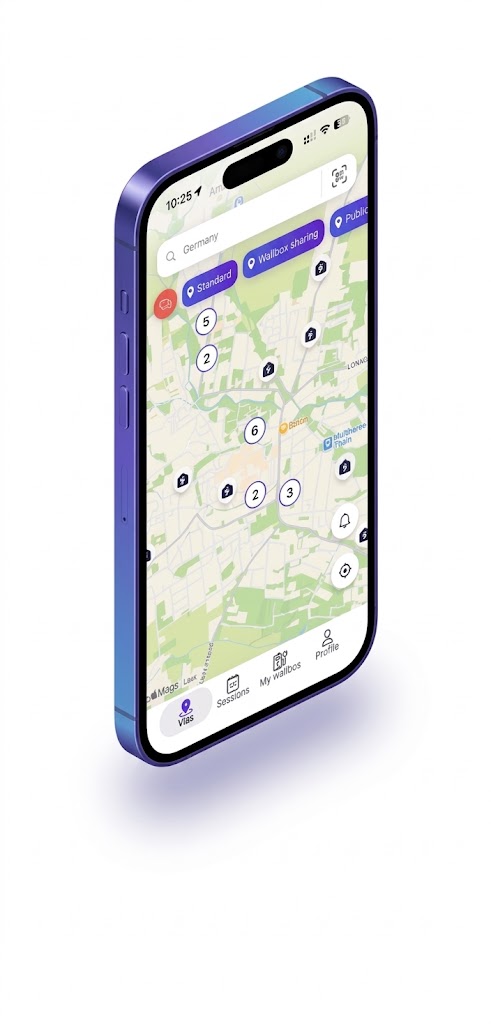
Map with clustered points and filter chips for standard, wallbox sharing and public access.
Point detail
Charging point detail: connector, power, price and current state, with the operator named.
Session
Session screen with energy, time and cost updating while charging.
Sessions and receipts
Sessions tab holding the full history and receipts.
Available on iOS and Android.
Find a charging point, start a session and pay, all from one app.
Questions drivers ask first.
Every point operated on Obelisk, plus the networks we have roaming agreements with. Coverage differs per market and is shown on the map before you drive to a point.
Card payment per session, or billing to an account when your employer or building operator has one. Receipts are issued per session and summarised monthly.
No. A session can be started from the app by scanning the point. RFID tokens remain supported where an employer or operator prefers them.
Yes. Owners can open a private charger to a defined group, set the price per kWh and see the sessions and earnings in the app.
Home and public sessions are recorded on one account. Your employer receives the statement and settles it under the policy they configured, so you do not file individual claims.
English and German at present, with further European languages planned as markets go live.